
On the last day of our Osaka leg, the plan was simple: wander. We had no schedule and no rush to catch the Shinkansen to Tokyo—just a full day to explore at our own pace. Osaka is a city that loves its food, and okonomiyaki—a savory Japanese pancake made with a batter of flour, eggs, shredded cabbage, and various toppings—was at the top of our “must-try” list. With that in mind, we left our luggage with the front desk and headed toward a highly-rated location in the nearby Nipponbashi district.
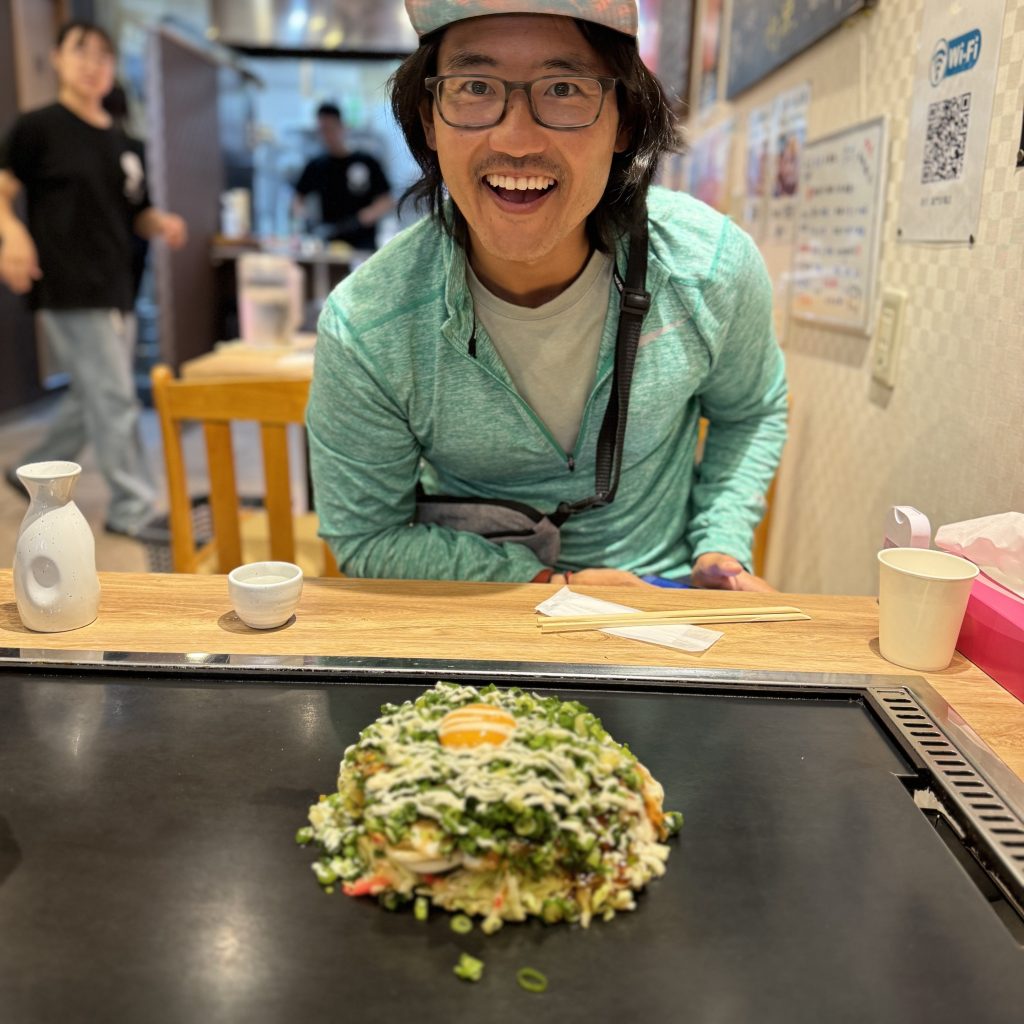
When our order arrived, it came with an unexpected twist: a layer of udon noodles nestled between the cabbage-laden batter and all the savory toppings. The chef placed the loaded okonomiyaki on our table-top teppanyaki.
The first bite was pure magic. The creamy batter, made even more delightful with the addition of nagaimo (grated yam), provided a unique texture that made it fluffy and moist. Combined with the crunch of cabbage, the smoky sauce, and that delightful chewiness from the udon, it created the perfect balance of flavors. Grace and I exchanged a look that said, “This is it. The okonomiyaki we’ve been searching for.” As we savored the last bites, I knew I’d have to recreate this dish back home, adding that layer of udon to bring a little piece of Osaka into my kitchen.
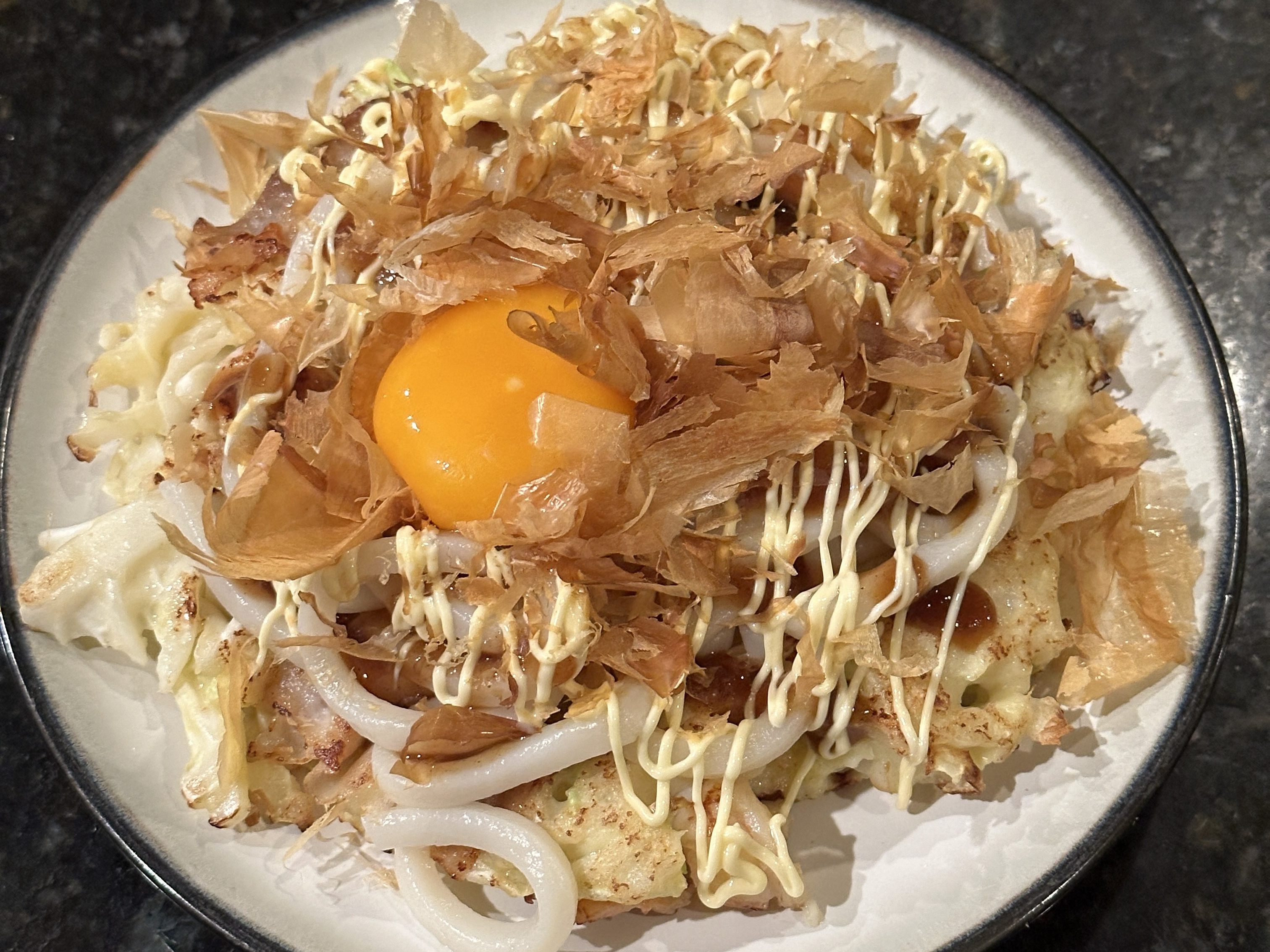
If you find yourself in Osaka, don’t miss Mitsuki Okonomiyaki. To my delight, this restaurant also served Kobe and wagyu beef. Here’s my recreation of okonomiyaki!
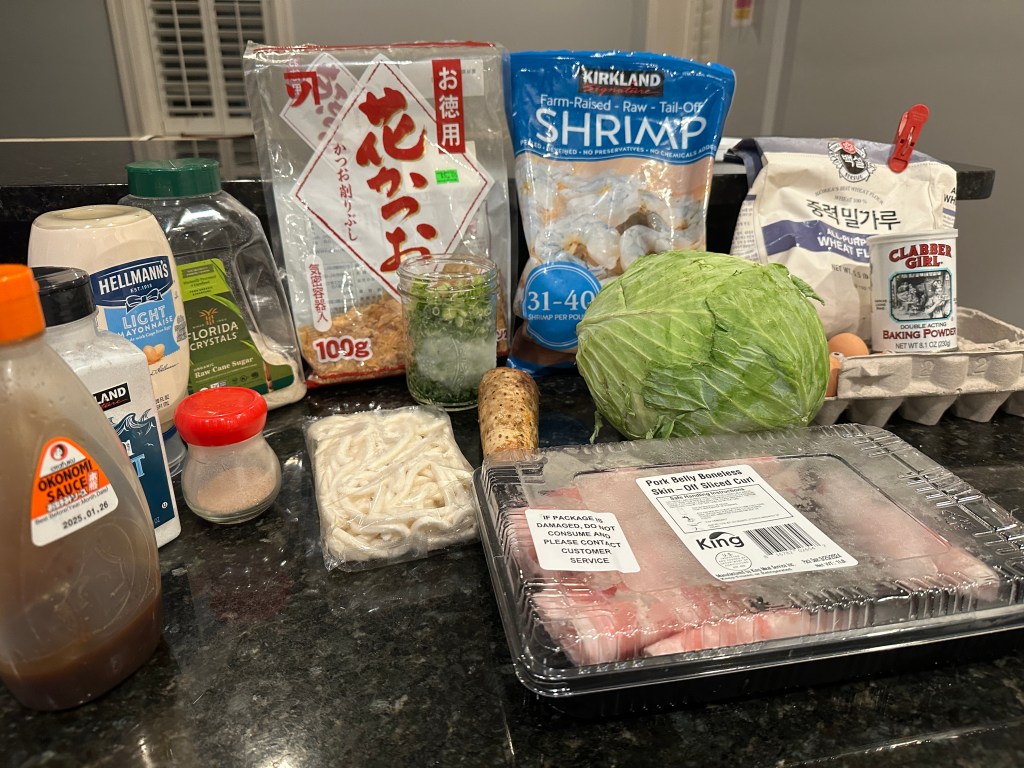
Here’s all the ingredients you’ll need. Grace was horrified that I was prepared to use American mayo so she went out to get Kewpie that night for us.
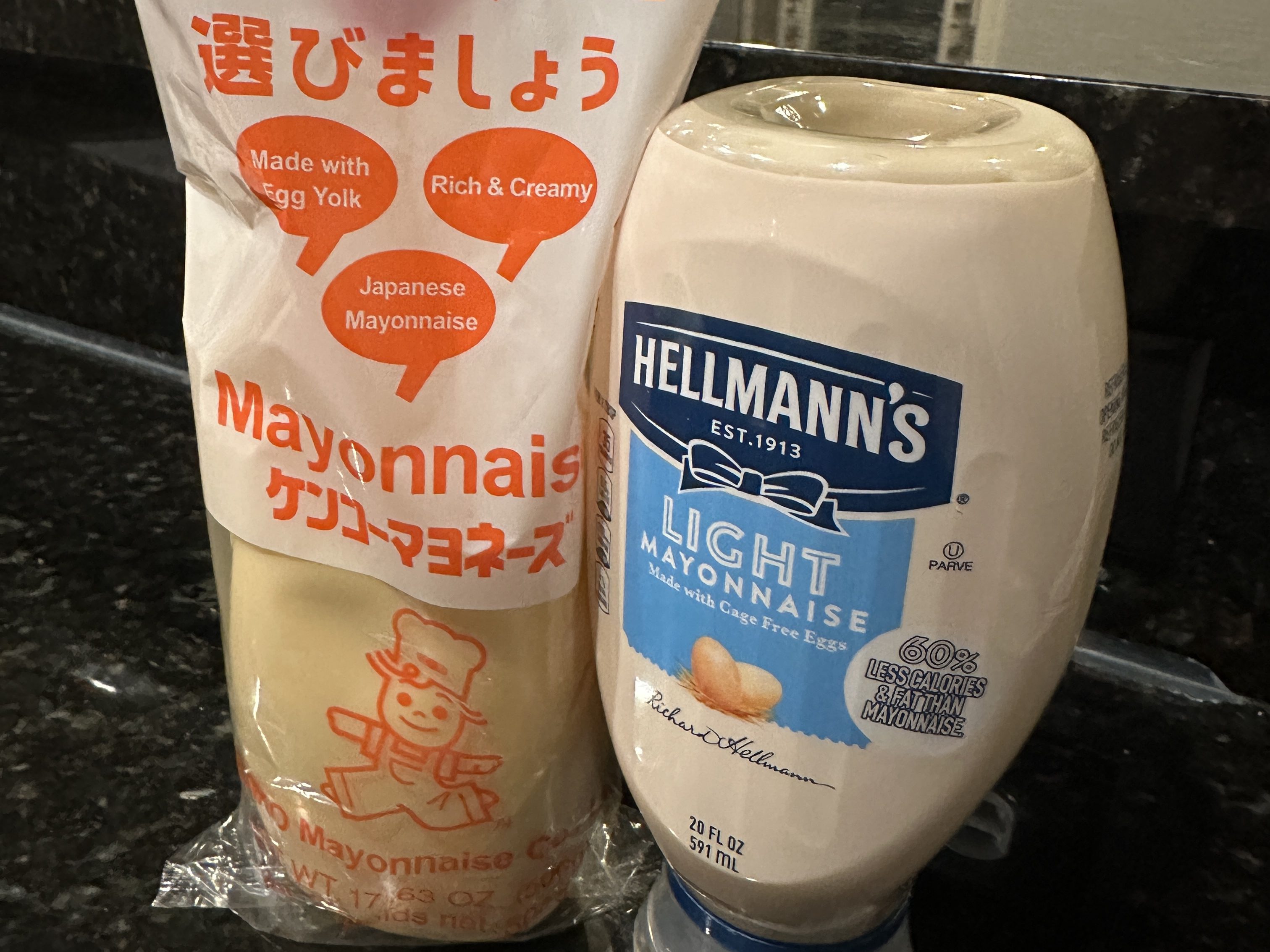
Japanese Kewpie mayo differs from American mayo in flavor, ingredients, and texture. Made with only egg yolks, rice or apple cider vinegar, and MSG, Kewpie mayo has a rich, umami-packed flavor with a custardy texture and balanced tang. In contrast, American mayo uses whole eggs, distilled vinegar, and sugar, giving it a milder, slightly sweeter taste and a creamier texture.
I had both green cabbage and savoy cabbage from Weee! on hand, and by happy accident, I decided to try the savoy. To my surprise, its slightly sweeter flavor and delightful crunch turned out to be perfect for the dish! The textured, crinkly leaves really soaked up the sauce, adding a whole new level of depth and making it a more exciting choice than the usual green cabbage.
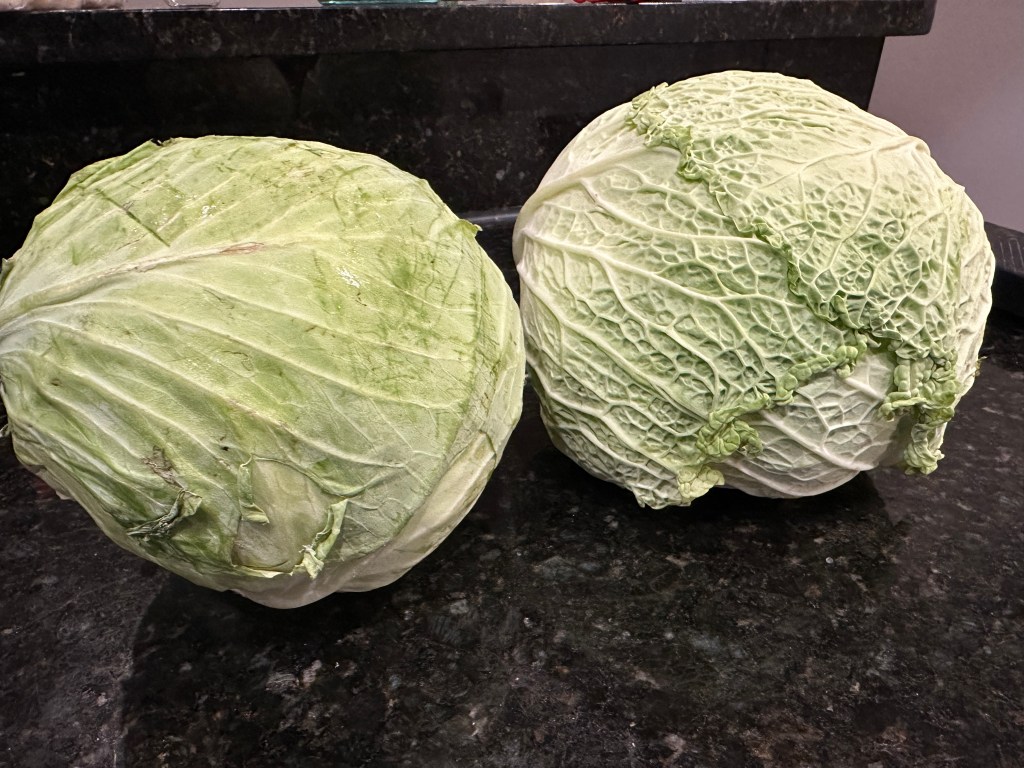
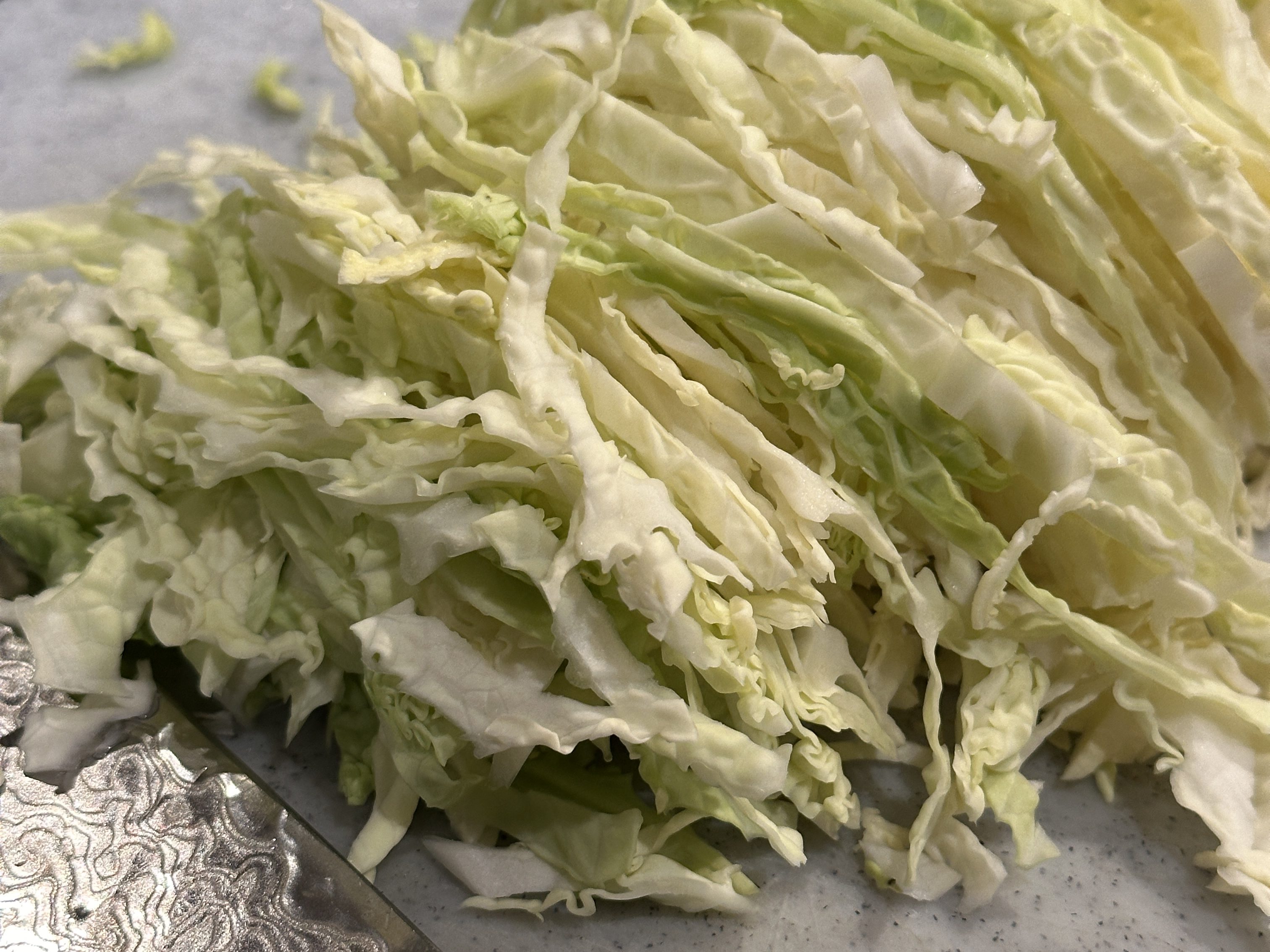
Cut the cabbage into 4 wedges. Slice off the core and julienne or finely shred the cabbage.
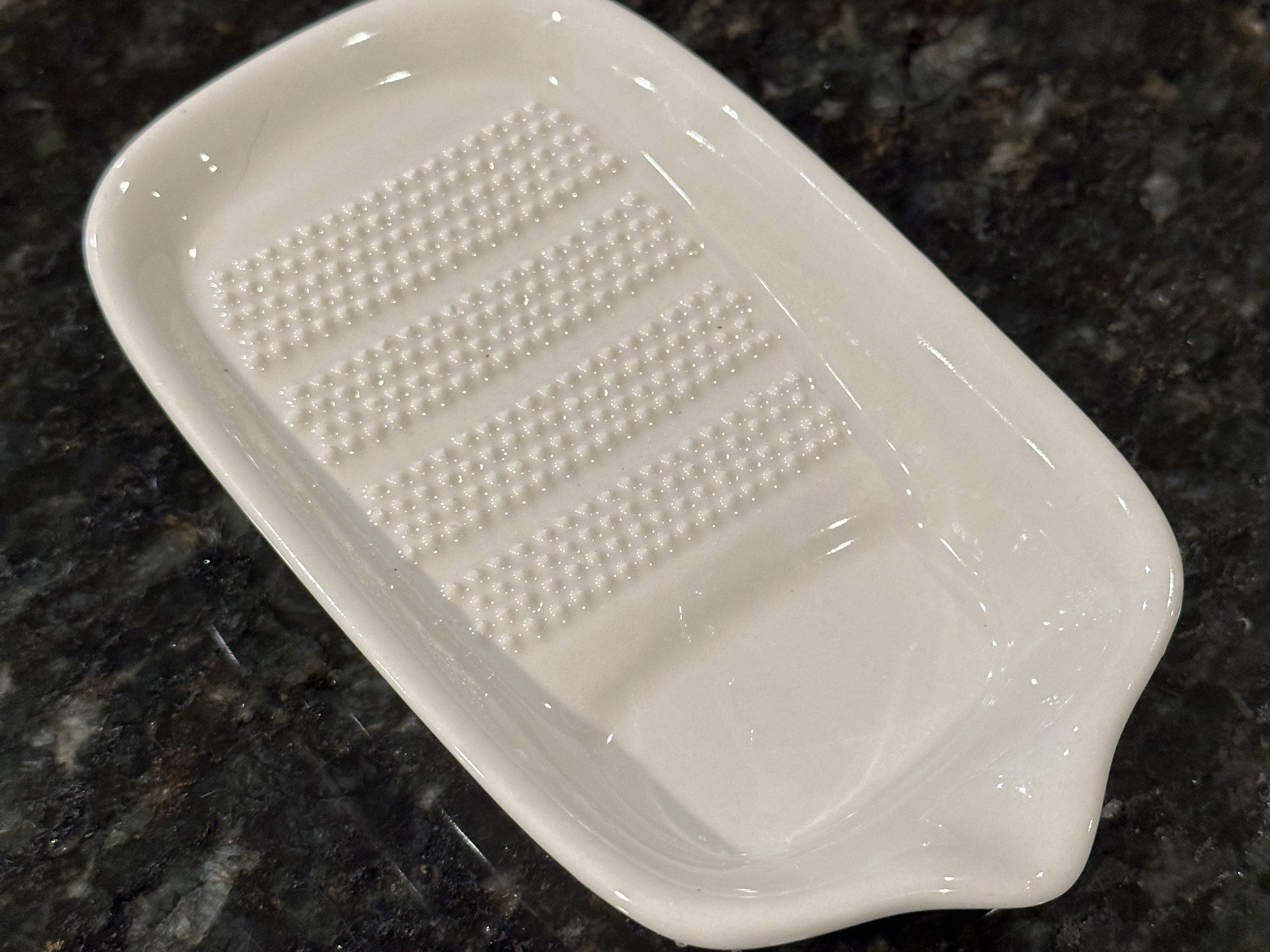
I’ve had this porcelain grater for years which makes quick work liquifying Japanese yam. I also use it to add raw ginger to dishes without any stringiness or chunks that you might bite into. While I couldn’t find the exact one I use on Amazon, here’s a top-rated option: https://amzn.to/4hEkZEF. This is an affiliate link, so it won’t cost you anything extra, but I do receive a portion of the sale. It also helps me track how many of you are trying this out!”
Ingredients (makes 3 pancakes)
- Batter:
- 120g (1 cup) all-purpose flour
- 180ml (¾ cup) water
- 2g dashi powder
- 75g (3-4 inch piece) of nagaimo (Japanese yam), grated into a paste (adds a unique texture and lightness to the batter)
- 4 medium or large eggs
- 1 tsp soy sauce
- ½ tsp baking powder
- A pinch of salt
- Filling:
- A fourth wedge of savoy cabbage, julienned or finely shredded
- 1 pack of cooked udon noodles
- Diced proteins (shrimp, thinly sliced pork belly, and/or chorizo)
- Toppings:
- Okonomiyaki sauce
- Japanese Kewpie mayonnaise
- Katsuobushi (dried bonito flakes)
- Sriracha (optional)
- Raw egg yolk (optional)
Instructions
- Prepare the Batter:
- In a bowl, mix the flour, dashi stock, grated nagaimo, soy sauce, baking powder, and salt until well combined. The nagaimo will give the batter a unique texture and lightness.
- Tip: To improve the flavor and texture, store the batter in the fridge for an hour to overnight. If using immediately, mix in the eggs.
- Mix the Filling:
- Fold in the shredded cabbage, green onions, udon noodles, and any additional protein you’re using.
- Cook the Okonomiyaki:
- Heat a non-stick skillet or teppanyaki grill over medium heat. Grease lightly with oil.
- Pour half of the batter mixture into the skillet, spreading it into a round shape about 1-inch thick.
- Cook for about 4-5 minutes on one side until golden brown, then flip using a spatula. Cook for another 4-5 minutes until the other side is golden.
- Add Toppings:
- Top with udon noodles
- Drizzle okonomiyaki sauce and Japanese mayonnaise over the top.
- Sprinkle with bonito flakes or katsuobushi.
- Crown with a raw egg yolk
Serving Suggestions:
Okonomiyaki is best enjoyed hot as the bonito flakes dance. Pair it with a cold light lager. The beauty of this dish lies in its versatility—feel free to experiment with different toppings or fillings, like shrimp, pork, or chorizo, to suit your taste!
This okonomiyaki with udon noodles recipe captures the essence of my culinary adventures in Japan while allowing me to share a piece of that experience with you. I hope you enjoy making and devouring this delicious dish as much as I did during my travels. Remember, cooking is all about having fun and exploring new flavors, so don’t hesitate to make it your own!
Happy cooking!
 Yummy Treks