
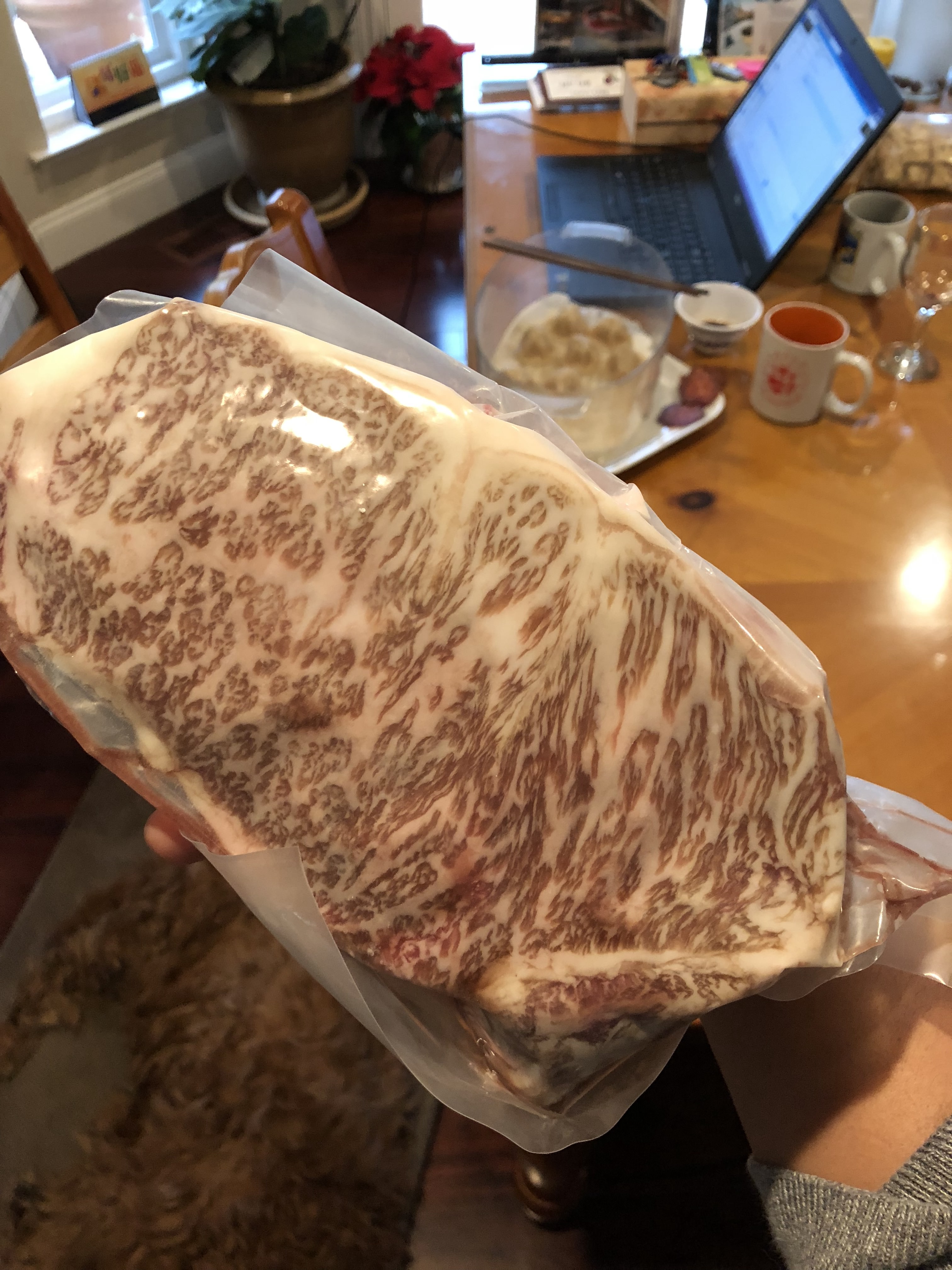
I decided to gift my parents something they’ve never had before – A5 Wagyu beef. Wagyu translates to “Japanese cow”, a breed of cow whereas Kobe beef comes from a Wagyu cow grown in the Kobe region of Japan. I purchased the Wagyu from Wagshal’s Market, an importer. They have a store front on Massachusetts Ave.
I bought two pounds of the strip loin for $140 per pound after discount. Overnight shipping to California came out to an extra $85. I had 8 dinner guests and two pounds of Wagyu was more than enough.
The Research
I had Wagyu for the first time in Japan in 2017. USDA prime doesn’t even come close. To cook it myself, I knew I had to do some research. This steak was too expensive to mess up.
I believe that, with cooking, recipes should serve as guides. Master the technique and learn to improvise. For Wagyu, I wanted to see what techniques other people use. Read further for my summary, or skip to the actual preparation.
Follow proper defrosting recommendations. CrowdCow recommends defrosting in the refrigerator for 24 hours. I’ve seen 48 hours as well and I personally did 72 hours because the steak I bought was two inches thick. 48 hours sufficed for a 2 inch steak. Wagyu beef fat melts at 77 degrees Fahrenheit whereas USDA prime beef fat melts between 125 and 140 degrees F. Do not, under any circumstances, use the microwave or hot water. Respect the meat.
CrowdCow has two very quick but thorough video guide for cooking different cuts of Wagyu. Check it out. They slice the New York strip into 1 inch strips and pan-fry it. The Wagyu tenderloin steak is pan-fried without cutting.
Most Youtube videos of “cooking Wagyu beef” or “Wagyu beef restaurant” show chefs preparing the steak on a teppanyaki grill. The veggies sides are prepared first. The room-temperature Wagyu steak is brought out so that the guests can admire the marbling. The grill is wiped clean before the Wagyu goes on, sans cooking oil. The steak is cooked roughly 30 seconds on each side to achieve the Maillard reaction. The puddle of fat is expertly scraped into the refuse container. The steak is then cut into strips, then into cubes, directly on the hot plate. Each cube is rotated so that all sides receive a quick 10 second sear. Bonus: some steaks have a large chunk of fat at the tip. This was typically cut off before cooking the steak and set aside for fried rice. Idea!
Wagyu beef is also served in yakinikus. Here’s one video of such an experience. Here, the Wagyu is sliced hotpot-thin and cooked over charcoal.
For the at-home cooking videos and articles, I found all the same steak cooking techniques: on a cast iron skillet while basting with butter and herbs, on a screaming hot stainless steel pan, in the over with reverse searing, in a sous vide bath followed by searing, on a pan and blowtorched, on an BBQ grill, and in a fryer.
Preparation
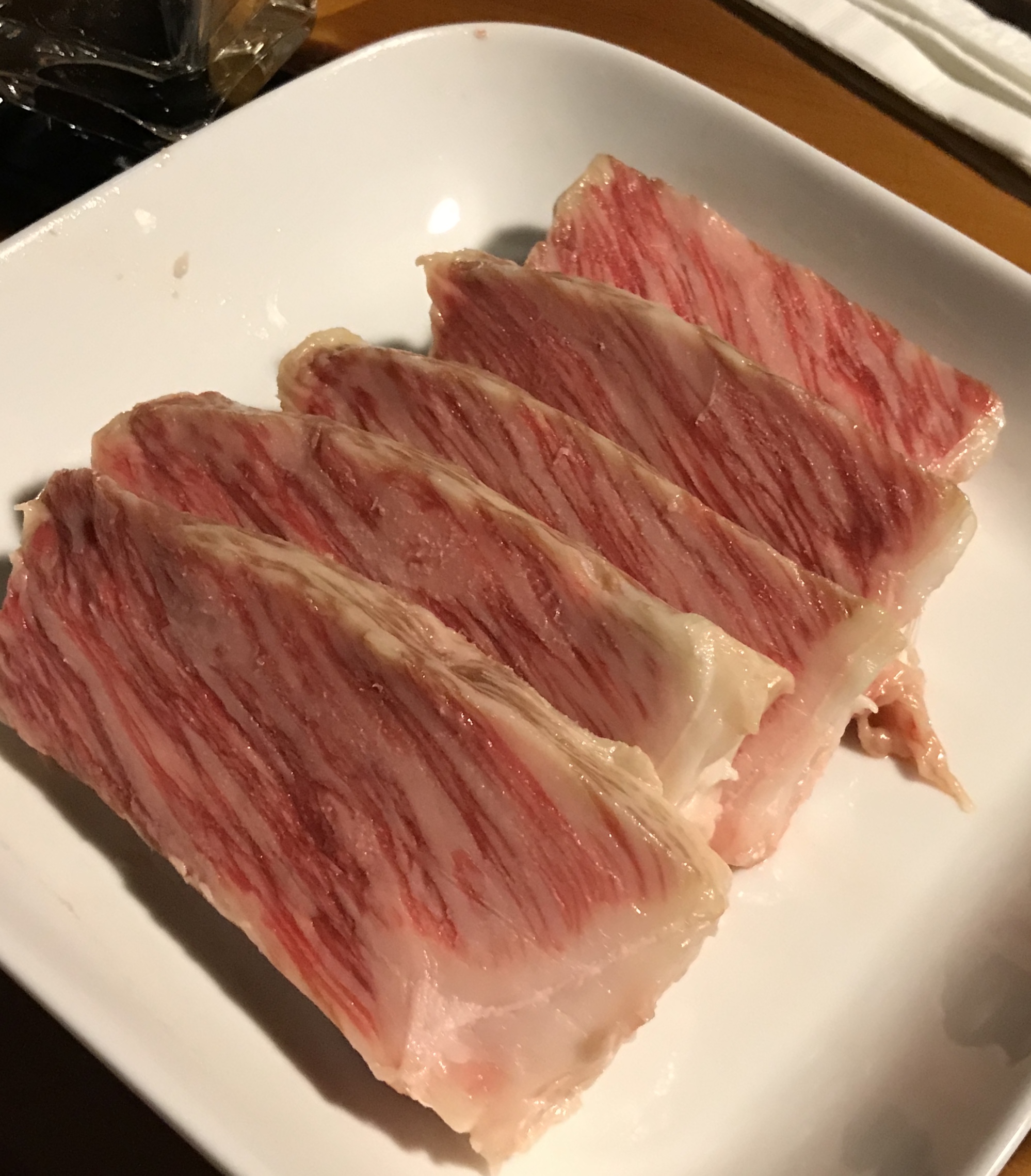
I defrosted the steak three days in advance in the fridge. Two days was enough for the 2 inch thick, 2 pound steak. I let the steak come to room temperature, about 1.5 hours. I sliced the steak into half inch slices, making the cuts perpendicular to the length of the steak. I did not add salt nor pepper before cooking. I left the length of fat that ran across the top of the steak alone but did cut off the fatty chunk at the tip of the steak. I diced this for fried rice. Nothing was wasted.
That’s it! I like lists so here’s the above information in list form:
- Defrost 24 hours to 48 hours. More time is needed for thicker steaks.
- Let the steak come to room temperature
- Slice perpendicular to the length
- Optional step: Cut off any large chunk of fat at the tip of the steak only and save for fried rice.
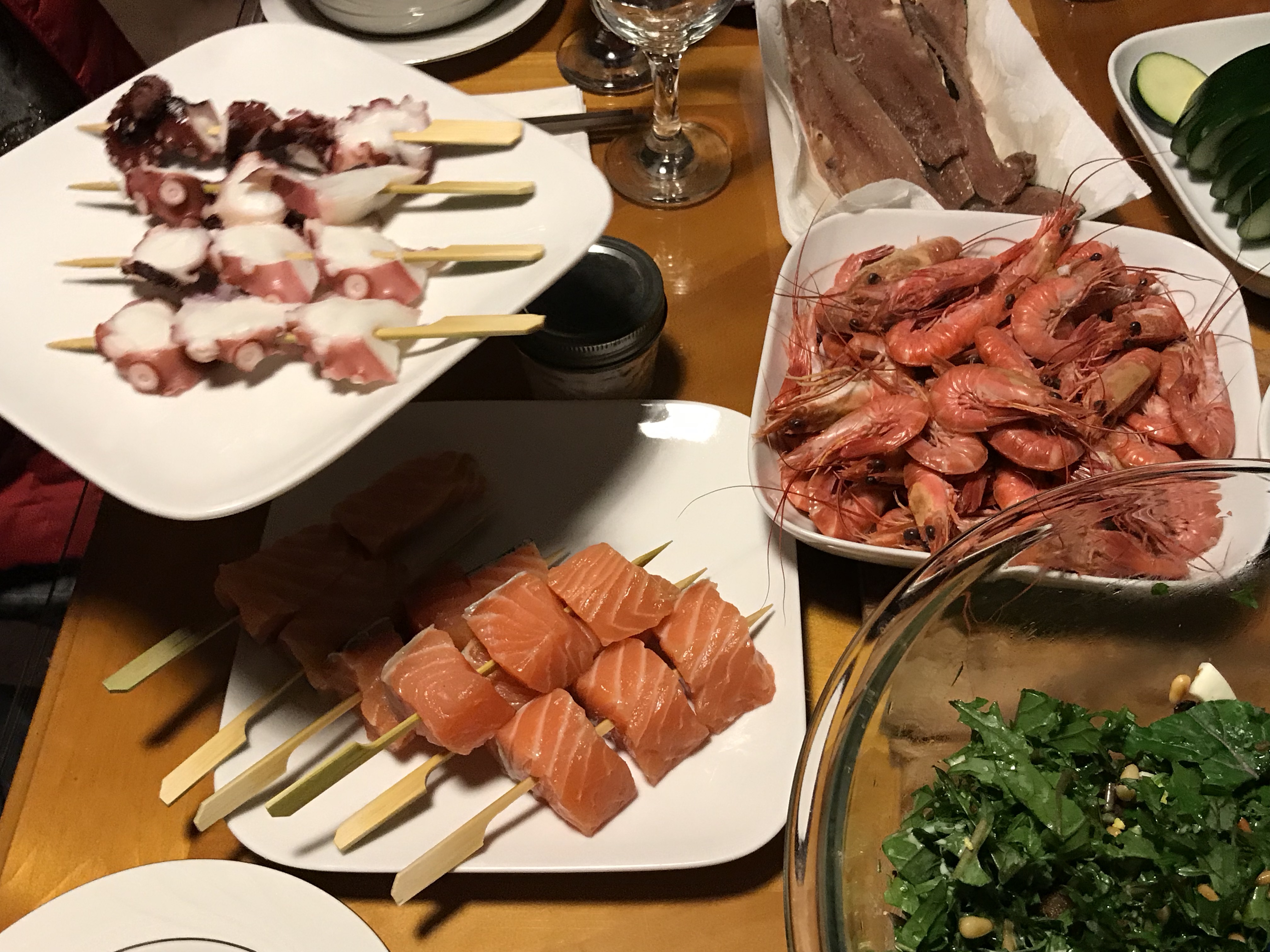
Unrelated but here’s some of the other items on the menu because you know…can’t just have steak for dinner.
- Fresh shiitake and portobello mushrooms (not pictured)
- Octopus (sashimi-grade, sliced, and skewered)
- Salmon with skin on (+ teriyaki finishing sauce)
- Mackerel fillets
- Kale salad with Caesar dressing, pine nuts, and egg
- Cooked shrimp appetizer
Cooking
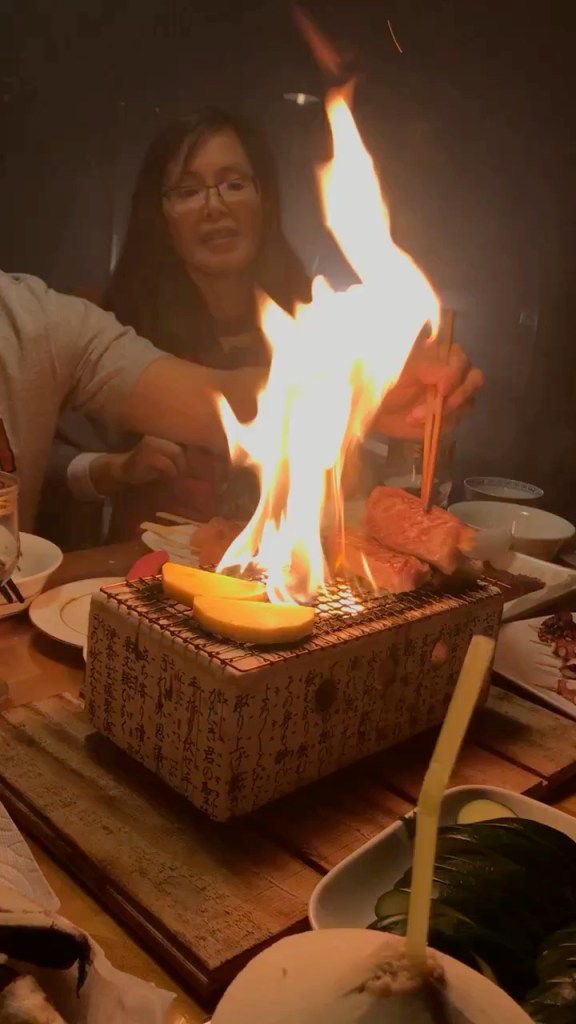
I set up my robata grill. I picked up all this stuff on Amazon.
- Robata grill
- Binchotan Charcoal – I prefer these because they’re uniform in size. Japanese binchotan is irregularly shaped and better for larger grills.
- Any charcoal chimney – I got Amazon’s choice
- Charcoal starter. Take 4 blocks and stack it up under the chimney.
- Bamboo skewers – soak these in water so they don’t burn on the grill. I used it to skewer the salmon. I normally use these when making chicken yakitori on the robata.
- Maldon Sea Salt Flakes
- Wire brush – for cleaning
Save yourself the headache and get the charcoal chimney plus charcoal starter, preferably a natural starter. Binchotan takes considerable amount time over an active fire to light because it’s not pre-doused in accelerants. I’ve used newspaper before; I replaced the newspaper every 3 minutes over a 20 minute period. For my robata grill, I prepared three logs in the chimney and split one in half.
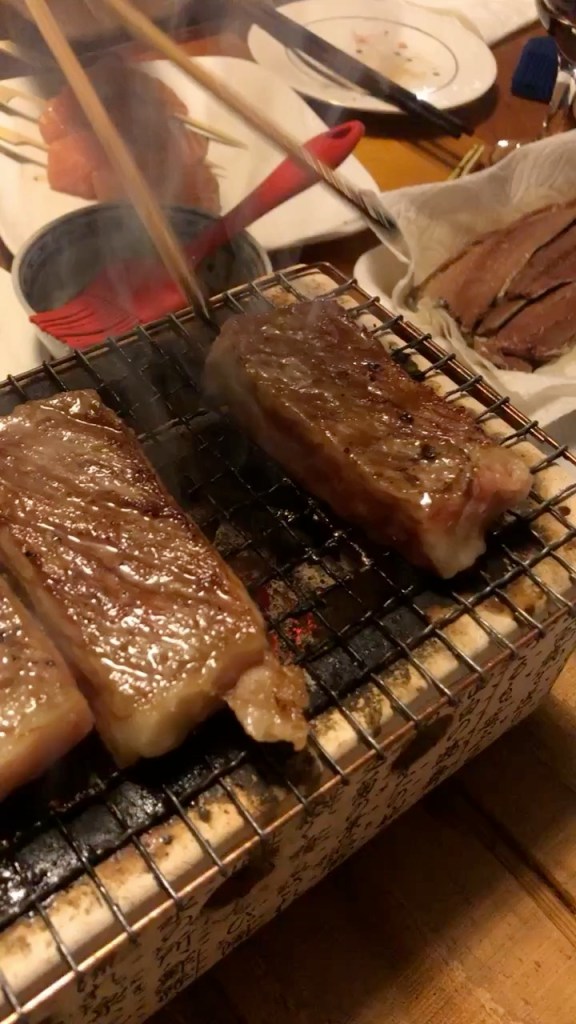
I probably should have realized this, but cooking over Wagyu over charcoal causes flare-ups. I flipped and moved each piece frequently.
I rested the meat for 3 minutes, sliced it diagonally like sashimi, sprinkled Maldon salt flakes on top, and served. I cooked it to a medium rare according to popular convention and my guests’ preferences.
Eating and Lesson Learned
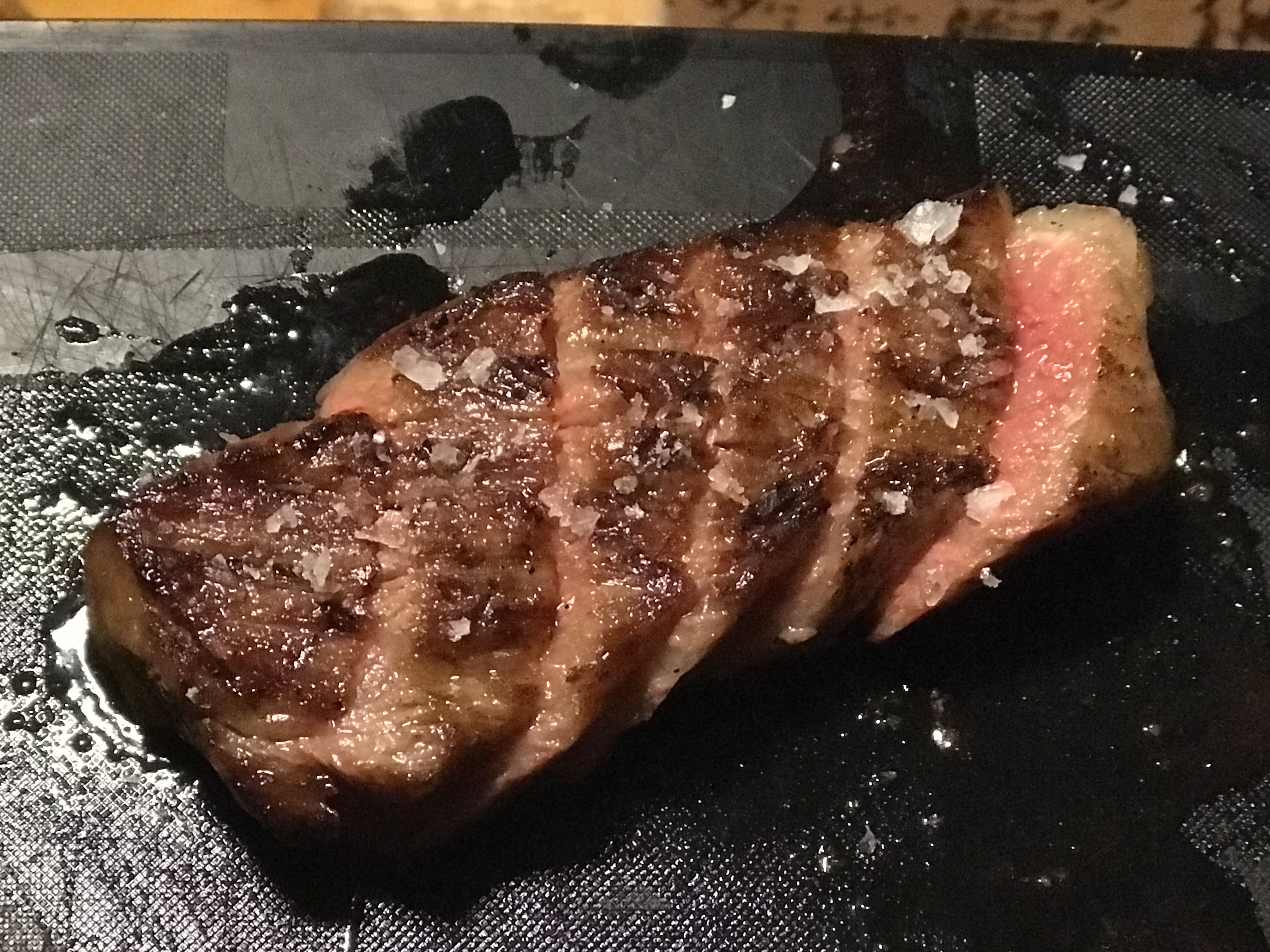
I took a bite and was immediately disappointed. It wasn’t “melt-in-your-mouth”, rather, it was chewier than anticipated. I was horrified.
Then I recalled my Wagyu experience in Japan – I was distinctly disappointed that my steak came out medium well and hadn’t been consulted on how I liked my steak. Yet all that was blown away when I took the first bite. A restaurant that specializes in Wagyu beef knows best.
Fortunately, we were cooking directly on the table so I tried cooking two slices to medium well. THIS was it – that “melt-in-your-mouth” sensation. Logically, this gave the meaty portions of the Wagyu a chance to essentially braise in its own fat. It also helped the fat melt bit more, leading to a cleaner and less oily finish.
The result of the grill versus the pan? Negligible. The Wagyu was so rich that the charcoal didn’t add as much flavor as I thought. It was an experience cooking directly on the table in front of guests, as open-kitchen as you can get.
Takeaways (more lists!)
- Wagyu can be pre-cut.
- Don’t stick to convention and cook it to medium well, regardless how you like a regular steak. Tell your guests to trust you. This is NOT your regular steak.
- Spend less time cooking by letting the steak come to room temperature. Use this time to let guest fawn over your purchase.
- Prepare this using your favorite steak cooking method. Reverse sear? Sous vide? Blowtorch? Go for it. After all how often will you splurge on Wagyu beef?
- No fancy dips or sauces. Salt, and maybe a touch of pepper.
 Yummy Treks